
Safety First: A Roadmap for Evaluating Interventions in the Atmosphere
Around the world, efforts are rising to counter weather and climate extremes. The fastest and most scaled approaches involve introducing material into the atmosphere to increase the reflection of sunlight - also called solar radiation modification, or SRM. This is no longer just the subject of computer models, or science fiction. Companies are developing versions of it, nonprofits are proposing rapid pathways, billionaires are backing it, and investment from governments is growing. Much of this work is focused on researching and developing a preferred approach, moving ahead of the evidence, tools and any coordinated frameworks for evaluating whether any approaches are safe.
One version of research starts with a simple question: how well can this be done? How much cooling per ton, how precisely can it be modeled, how quickly can the material and delivery capacity be scaled.
Those are good questions. But they are not the decisive ones.
Another version starts from the protection of people and natural systems, asking the question, what is safe? Answering it calls for a different kind of roadmap than one built around performance. It calls for delivering safety first.
What "safety first" means
In most fields where the stakes are human or environmental impacts, safety is a primary target for research and a gate that must be passed through before studies of efficacy on patients. A new drug is not judged on how well it treats a disease until a dedicated, decoupled phase has confirmed it does not harm the people taking it. The two questions are sequenced deliberately: a treatment that works beautifully but carries unacceptable risk of harm is a rejected candidate, not a qualified success.
Climate intervention calls for the same discipline, for a reason that is easy to state and easy to underestimate: there is only one atmosphere.
Whatever is learned about its risks is learned in the same system any eventual intervention would enter. Sequencing, what evidence is established before what is scaled, is a matter of real consequence, not process for its own sake.
A safety-first approach is designed to drive the data and evidence necessary to project the future state of the system and compare the effects of new influences on it within reasonable bounds of uncertainty and to define acceptable levels of risk. It prioritizes identifying no-go conditions and hazard thresholds to determine the requirements that any intervention must meet. Wide uncertainties are not safe - we need to forecast well enough to bet our lives on the answers.
What a safety-first roadmap does
A safety-first approach rests on three pillars: expanded observations and model improvements to reduce uncertainties in the forecasts of future conditions; careful sequencing of what evidence is established before what is scaled; and broad, independently evaluated, portfolios of intervention options rather than early narrowing of options.
A safety-first roadmap:
Identifies critical risks and hazards and a roadmap of studies to evaluate them, rather than treating safety considerations as a byproduct of experiments built to answer performance questions.
Drives toward actionably accurate forecasts of the future state of the atmosphere and Earth system, independent of any intervention. It aggressively seeks to reduce uncertainties in model projections that are too weak for determining safe and effective outcomes in the future.
Accelerates the delivery of sustained, global atmospheric observations as a prerequisite for any atmosphere or Earth system intervention program. Observations are required to ground models in reality, take down key uncertainties and to measure and monitor any activity in the atmosphere.
Drives independent research across a portfolio of candidate interventions, to optimize against uncertainties and risks, to hedge against changing conditions in the future, and to ensure a field's institutional and financial momentum never becomes the argument for the option already underway.
Continuously expands and refines the range of alternatives to reduce side effects and improve outcomes, the way medical practice does, so that any activity in the atmosphere includes ongoing efforts to improve safety.
Evaluates system-wide, cumulative risks and hazard thresholds for candidate interventions, like the additive risks to the ozone layer of intervention in the context of changes in pollution in the stratosphere.
Reports safety findings with the same visibility and rigor as performance findings, so "how much is known about efficacy" and "how safe this is" never blur into a single, reassuring headline number.
Treats governance, regulation and stakeholder participation as part of the research architecture from day one. Safety findings mean little if the world lacks the capacity to govern the decisions they inform.
Evaluating interventions requires ‘actionably accurate’ forecasting
Evaluating any intervention requires projecting its effects on future atmospheric and climate conditions with enough certainty to reasonably inform action — a point made by Rob McHenry, former acting director of DARPA and an advisor to this work. Today, models disagree by more than 1°C on aerosols' influence on Earth's energy balance, and disagree even on the direction of the land carbon flux — whether, in coming decades, it will be a large net source or a large net sink. Atmospheric interventions leverage processes with wide uncertainties to influence a highly uncertain energy balance in the atmosphere over time. These uncertainties are too wide for projections of interventions to be actionably accurate.
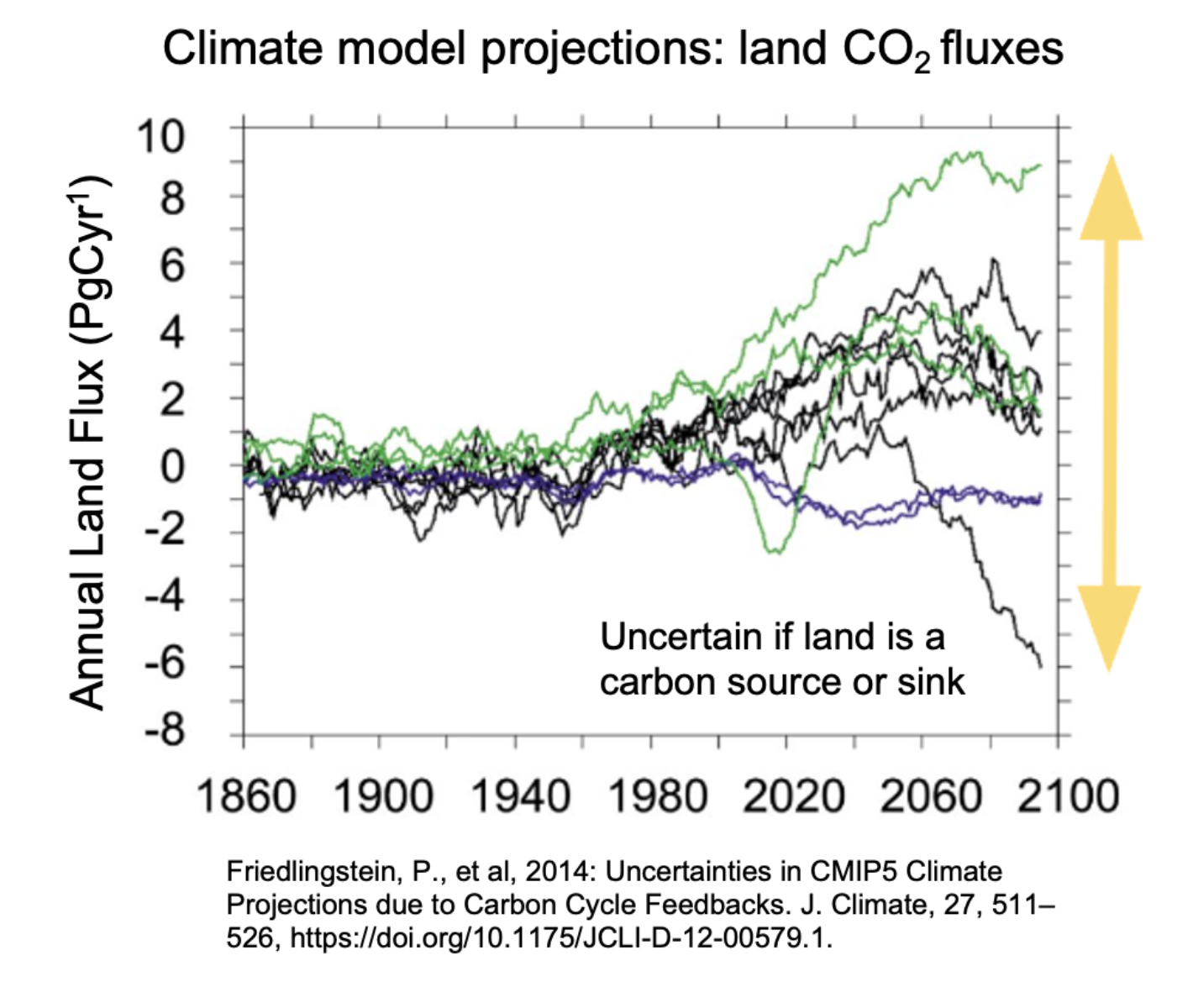
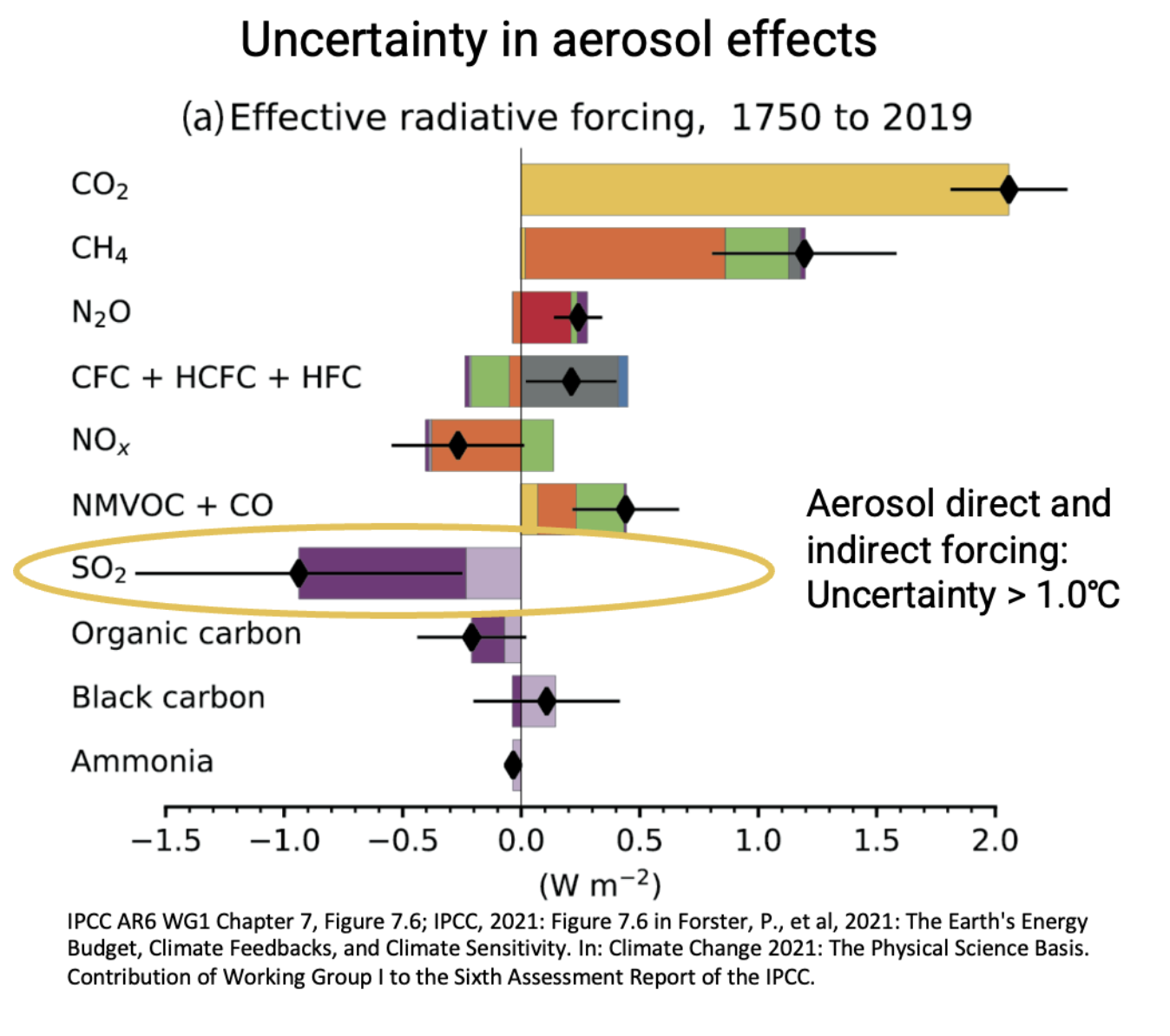
Persistent uncertainties in the influence of drivers of the energy balance in the atmosphere have confounded scientists, and much of the field has adapted to scope around them. SRM researchers elide them when relying on existing models, despite those models' gaps and uncertainties in the very areas the approaches target. They instead focus on the uncertainties of specific approaches, within the bounds of what those models can already do.
A better path exists: new observations can narrow uncertainty in system-wide forecasts while enabling a more rigorous assessment of the conditions any intervention would act within — including regional climatic, ecological, and human impacts — until those forecasts reach a level of certainty that can reasonably support action. Rapid progress on reducing uncertainty is not only possible. It is what the safety problem requires.
The ozone layer case
The ozone layer protects people, animals and ecosystems from 98% of the sun’s harmful rays. The consequences of severe depletion of the ozone layer range from regional public health crises to an existential threat for humanity. Ozone recovery is a remarkable success story of international cooperation. The Montreal Protocol phased out the chemicals causing a hole in the ozone layer over Antarctica, and it has since been recovering steadily and measurably.
That recovery now faces new pressure from human activity. Large wildfires loft smoke directly into the stratosphere, disrupting the same chemistry that protects the ozone layer. A separate and growing pressure comes from the space-launch industry, which is adding soot, metal oxides, and reactive chlorine to the stratosphere at rates expected to climb sharply as satellite counts move from today's tens of thousands toward planned megaconstellations numbering in the millions.
The nature of future pollution, and their effects on the ozone layer, determine the safe boundaries, in terms of ozone layer depletion, for any new material being introduced. The “ozone impact budget”. The Montreal Protocol manages these budgets for traditional ozone depleting substances.
Current models have gaps in their representation of stratospheric processes and omit many of these new influences, producing wide uncertainty in projections of how interventions would affect the ozone layer. The mean projection may look safe, but the range behind it extends to dangerous, even catastrophic, outcomes. Compounding the problem, the satellites and aircraft that monitor stratospheric conditions and could narrow this uncertainty are already operating past their projected end of life.
Study of one approach to stratospheric intervention using the information and models we have today, however careful, is necessarily incomplete: the safe operating margin it measures against is continuously shifting, and must be evaluated against both likely and extreme future conditions to adequately manage risk.
Before society can clear any stratospheric intervention as safe, the data and tools needed to forecast its effects on the ozone layer require rapid, concerted work.
This is one of a number of critical hazards that must be evaluated, with clear representation of uncertainties, and what they mean for ensuring safety.
Observation is evidence
Observations are the record of the real atmosphere, gathered by satellites, balloons, aircraft, and ground stations rather than inferred from models. Without observations, there is no way to know whether the system is behaving as expected, drifting from projections, or responding in a way that no model anticipated.
Sustained observations establish a baseline for what the stratosphere looks like, tracks changes, and grounds models for projecting conditions years or decades ahead. It requires hard-to-make measurements that few people outside atmospheric science think about. For the stratosphere, it includes continuous, vertically resolved, global profiles of ozone, aerosols, water vapor, ozone and the halogen and other trace gases that govern ozone loss.
For more than two decades, two instruments have supplied most of this record: NASA's Microwave Limb Sounder aboard the Aura satellite, and the Atmospheric Chemistry Experiment Fourier Transform Spectrometer (ACE-FTS) aboard Canada's SCISAT-1. Their data enabled scientists to trace the 2020 ozone losses after the Australian wildfires to a previously undocumented chemical pathway involving organic aerosol, and quantify how the 2022 Hunga Tonga eruption altered stratospheric water vapor and temperature for years. Those findings were possible because of a maintained baseline, which let researchers recognize, attribute, and track an unanticipated change after the fact, whatever caused it.
A third instrument, NASA's SAGE III aboard the International Space Station, measures particle sizes and uses solar occultation - tracking the sun and moon - to make those measurements absolute, anchoring the broader fleet of aerosol- and ozone-observing instruments to a common standard. It is, in effect, the measurement other measurements are checked against.
All three missions are operating beyond the end of their working lifetimes, and no mission is currently confirmed to replace the measurements they collectively provide. NASA's proposed STRIVE mission, with its ALICE and ARGOS instruments, would close some of this gap, but will not reproduce the self-referencing precision that SAGE III and ACE-FTS derive from occultation. Building, funding, and launching equivalent instruments takes many years, and in the interim large portions of the stratosphere would be unmonitored at global scale.
This critical data vulnerability is not confined to the stratosphere. In general direct “in-situ” atmospheric measurements of the influences on energy/reflectivity are concentrated over the US,Europe and parts of Asia. Satellite instruments rely on these in-situ measurements to refine their data products. Many systems are aging. Recent reductions in budgets for US land-based, balloon, aircraft and other measurement programs have further complicated the picture.
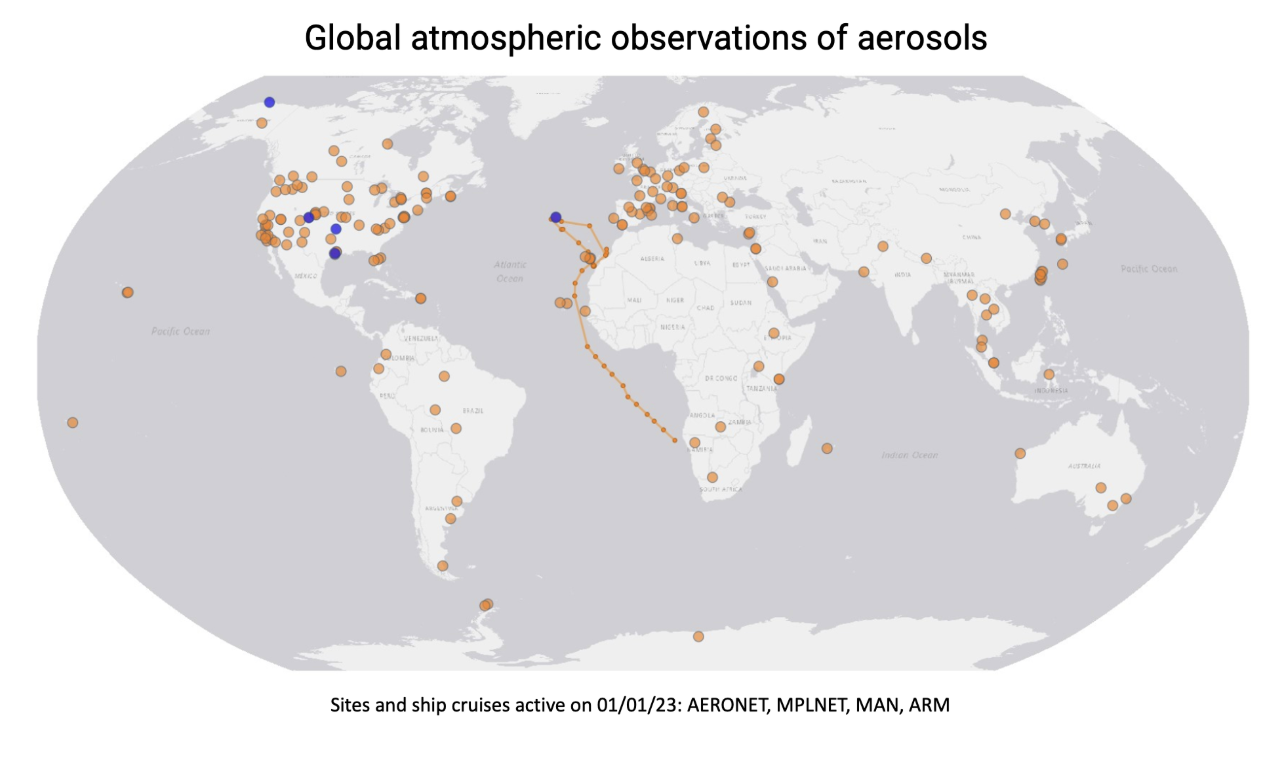
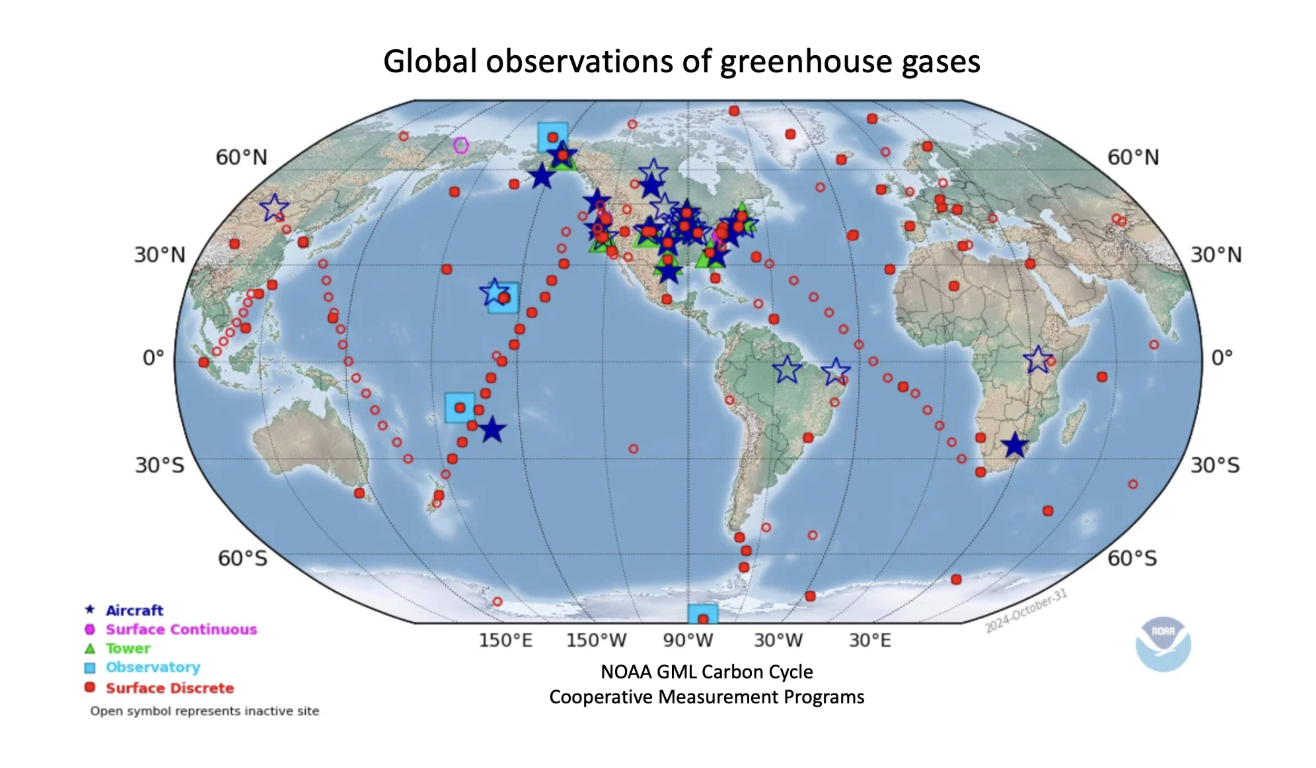
A model is only as good as the observations used to build and test it. A projection of future conditions is only as credible as the baseline and ongoing record it is measured against. Observation is what grounds every other kind of research in evidence, from modeling to laboratory work to field experiments.
Closing data gaps is one of the most direct ways to reduce uncertainty on projections of the atmosphere - essential for evaluating atmospheric interventions, but also for an array of forecasting, safety, economic security, strategic security and public health problems. Direct observations can be more fully leveraged with analysis systems that synthesize data, and coupled climate-chemistry-ecosystem modeling frameworks that can put them to rigorous use in assessing regional and ecological impacts.
Expanding observations is one of the most powerful levers available for reducing uncertainty, informing decisions and promoting safety for the atmosphere and climate. This has been the foundation of the roadmap published by SilverLining, a nonprofit focused on near-term Earth system risk, since 2020.
Portfolios reduce risk
A temptation shows up early in any technical field: once an early technology gains momentum, funding, and an early community of practice, it tends to keep advancing the approach already underway. Reputational and financial investment compound these dynamics and drivers for early consolidation versus expansive exploration.
That dynamic is natural. It is also a real risk. A safety-first roadmap treats the portfolio of options as itself a subject of research, not a decision made once and left behind:
Multiple intervention classes get evaluated side by side: stratospheric particle injection, marine cloud brightening, cirrus cloud thinning, rather than one being chosen early and built around for years.
Within any one class, the choice of materials or methods stays an open scientific question with its own dedicated research, not a default set by whichever option is most convenient to study.
An option can still be set aside entirely if its safety case does not hold up, which is only possible if the field has not already sunk years of funding and institutional identity into it.
The option with the most existing data is not the same thing as the option with the least risk. The two can point in the same direction. They frequently do not.
For stratospheric interventions, sulfate is the dominant material studied, but its known drawbacks — stratospheric heating, ozone interactions, circulation changes — have pushed some researchers toward solid alternatives like alumina, calcite, or diamond dust. These materials may reduce some side effects but bring their own unresolved chemistry and lack sulfate's real-world volcanic precedent. That work remains nascent: models still diverge on basic regional outcomes, like whether SAI causes the Indian monsoon to collapse, and are poorly equipped to resolve ozone chemistry impacts, shifts in crop-relevant sunlight, hydrological cycle suppression, or termination shock. Deeper questions, like the potential for cascading agricultural or ecosystem collapse, remain largely unaddressed. Engineering feasibility is uncertain.
In that environment, the ability to generate candidate aerosol emissions and study them is imperative, because scientists do not agree on what, if any, differences matter.
Are expanded observations, improved models, and a wider set of alternatives really too costly and slow?
Wide uncertainties, information gaps, and unresolved safety questions surface in any narrowly scoped effort to move quickly. The result is often stasis: without evidence relevant to public and environmental safety, decisions cannot get made.
Narrowing evaluation criteria to direct costs and primary effects ignores something most people grasp intuitively and economic systems already assume — costs and benefits must be adjusted for uncertainty and risk. We do not currently have what that evaluation requires. A rapid assessment of an intervention's primary effects does not supply it either, and in practice, the lack of adequate information stalls decision-making, limits investment, and feeds controversy.
Expanding what is known about the atmosphere and candidate interventions improves safety and widens the range of options. It also accelerates analysis and decision-making across every dimension of atmospheric intervention.
Platforms versus products
Today, start-up companies and non-profits — Stardust, Make Sunsets, Reflective, and others — are selecting preferred interventions and working to speed their path to adoption. Some are ruling out entire classes of intervention, including marine cloud brightening, on the grounds that it would take longer to understand. But marine cloud brightening is also a variant of a pollution effect already occurring — which makes better information about it more relevant, not less, to a research agenda.
Widening the scope of the problem — evaluating more candidates and reducing uncertainty in how they would affect the broader system — is usually treated as a trade-off against speed. A program can move fast or stay broad, but not both, or so the assumption goes. There is another option: invest in platforms that accelerate the underlying data and evidence and evaluate many paths in parallel, instead of one at a time.
SilverLining partners with world leading institutions in efforts to do just that. In 2020, the organization published a roadmap - the first in the field - describing priorities for expanding data, improving model projections, and evaluating candidate interventions. Through its Safe Earth System Research Initiative, SilverLining worked to deliver against the roadmap, supporting research and providing foundational capabilities for the field - such as the first high resolution simulations of stratospheric intervention, and emerging platform capabilities at the frontier of science and innovation.
Today, SilverLining and its partners are building platforms that accelerate information and evidence, supporting more rapid progress along parallel pathways for understanding the future atmosphere and the interventions proposed for it.
Rapidly scaling observations. Direct measurement of the atmosphere remains sparse in ways that limit the ability to project future radiative forcing and other atmospheric conditions. Closing that gap in the upper atmosphere requires capital-intensive investment in space-based capability. In the lower atmosphere, a more immediate opportunity exists: commercial ships and aircraft can be instrumented to expand the global data that drives climate models, informs forecasting, underpins regulations and advances solutions, within years rather than decades.
SilverLining partners with collaborators in BEACONS, the University of Washington, Pacific Northwest National Laboratory; Radiant Earth; the University of Leeds; Maersk; Bernhard Schulte Shipmanagement, and others on Scaled Observations for Atmospheric Resilience (SOAR), a program deploying reference-grade atmospheric instruments on commercial ships. Sustained, accurate, widespread measurements of the marine atmosphere could reduce key model uncertainties, such as cloud-aerosol effects, and improve forecasts of the atmosphere, climate, and proposed interventions. A parallel set of aircraft pilots is building a similar pathway for the vertical troposphere. A modest global network of dozens of ships and planes, moving in continuous transects and combined with satellite data, could dramatically improve the datasets that drive weather, climate, and AI models.
A platform for aerosol generation portfolio analysis. Every proposed approach to climate intervention depends on the size and other physical characteristics of a stream of aerosols produced at the large volumes and narrow size distributions contemplated for intervention. A capability for generating controlled streams is a foundation for accelerated research and safety optimization. Placing this capability in a scaled indoor environment that simulates the wind, airflow, and altitude conditions of the stratosphere or troposphere, instrumented with calibrated measurement systems, at a scale large enough to study candidate aerosol streams could support safety and process research across a wide range of materials. It could support evaluation of immediate environmental impacts and inform models of their effects at larger scales.
SilverLining and University of Central Florida Hyperspace Laboratory have developed a prototype platform for generating controlled aerosol streams at scale for a wide range of candidate materials. We are collaborating with University of Washington, NASA Langley Research Center, SUNY Albany, and others on studying their effects, including via a potential Stratospheric and Tropospheric Aerosol Research (STAR) Facility for evaluating an array of possibilities in an indoor environment. The program is designed to research and evaluate candidate materials at simulated stratospheric or tropospheric altitudes and airflows and could also support regulatory agencies reviewing the safety, monitoring, and oversight requirements attached to any outdoor activity under consideration.
These groundbreaking platform capabilities offer a powerful way to accelerate research and close critical uncertainties while expanding the range of possibilities and scope for optimizing for safety. They allow research to minimize the costs that matter most: the uncertain risks to people and to the environment.
A roadmap for safety for our one and only atmosphere
Put together, the pieces above support a new, safety-oriented roadmap: observations and models expanded well beyond today's capabilities, broader portfolios instead of early narrowing, platforms that generate new evidence instead of working only within what existing tools allow, and safety established before anything scales. The roadmap below lays out an early version of how those pieces could fit into a single, sequenced plan for evaluating whether any stratospheric intervention can be shown safe, and under what constraints.
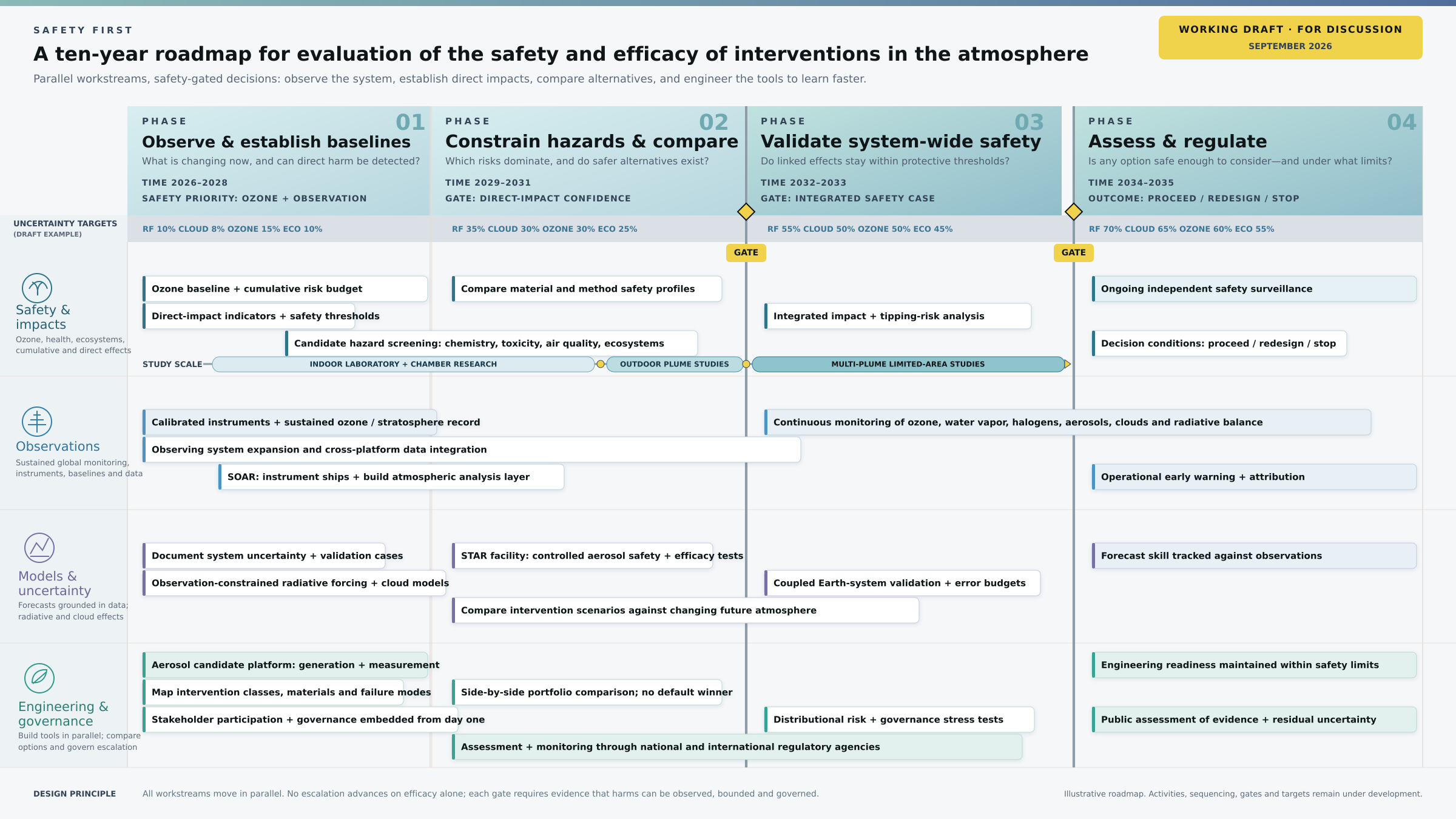
Cooling performance is not the hardest or most pressing problem. Safety is, and safety cannot be answered by studying one approach in isolation, using only the models and data available today. It requires a portfolio of candidate approaches evaluated against each other, using models and analysis tools built on more and better data.
There is urgency, because these approaches are being developed and aggressively pursued. The responsible way to meet that pace is a research ecosystem and agenda broad enough and rigorous enough to determine how to evaluate safety and make safety determinations prior to any activity outdoors, at scale. It must be grounded in sustained observation; produce findings within acceptable ranges of uncertainty; and support national and international institutions, like those built around the Montreal Protocol, that are trusted to steward a shared atmospheric resource. There is only one atmosphere. A roadmap equal to that fact has to be comprehensive, rigorous, and genuinely able to evaluate safety first.
This piece reflects ongoing work by the SilverLining team and a wide set of collaborators on a research roadmap for a safe and secure atmosphere.