Why Sustained Marine Observations Matter for Atmospheric Research
I spend a lot of my time thinking about what is underserved in atmospheric science and where the highest leverage opportunities really are. Again and again, I come back to the same conclusion: sustained, in-situ observations of the atmosphere are both critically important and dramatically under-resourced.
A large part of our work at SilverLining focuses on understanding aerosols and their role in the Earth system. What makes this challenging is not just the complexity of the physics, but the lack of consistent, high-quality data from many parts of the world. Many of the questions we are trying to answer about aerosols, radiation and temperature simply cannot be resolved without long-term, continuous measurements taken directly in the environment.
This is where Scaled Observations for Atmospheric Resilience, the foundation of SilverLining’s SOAR program, become essential.
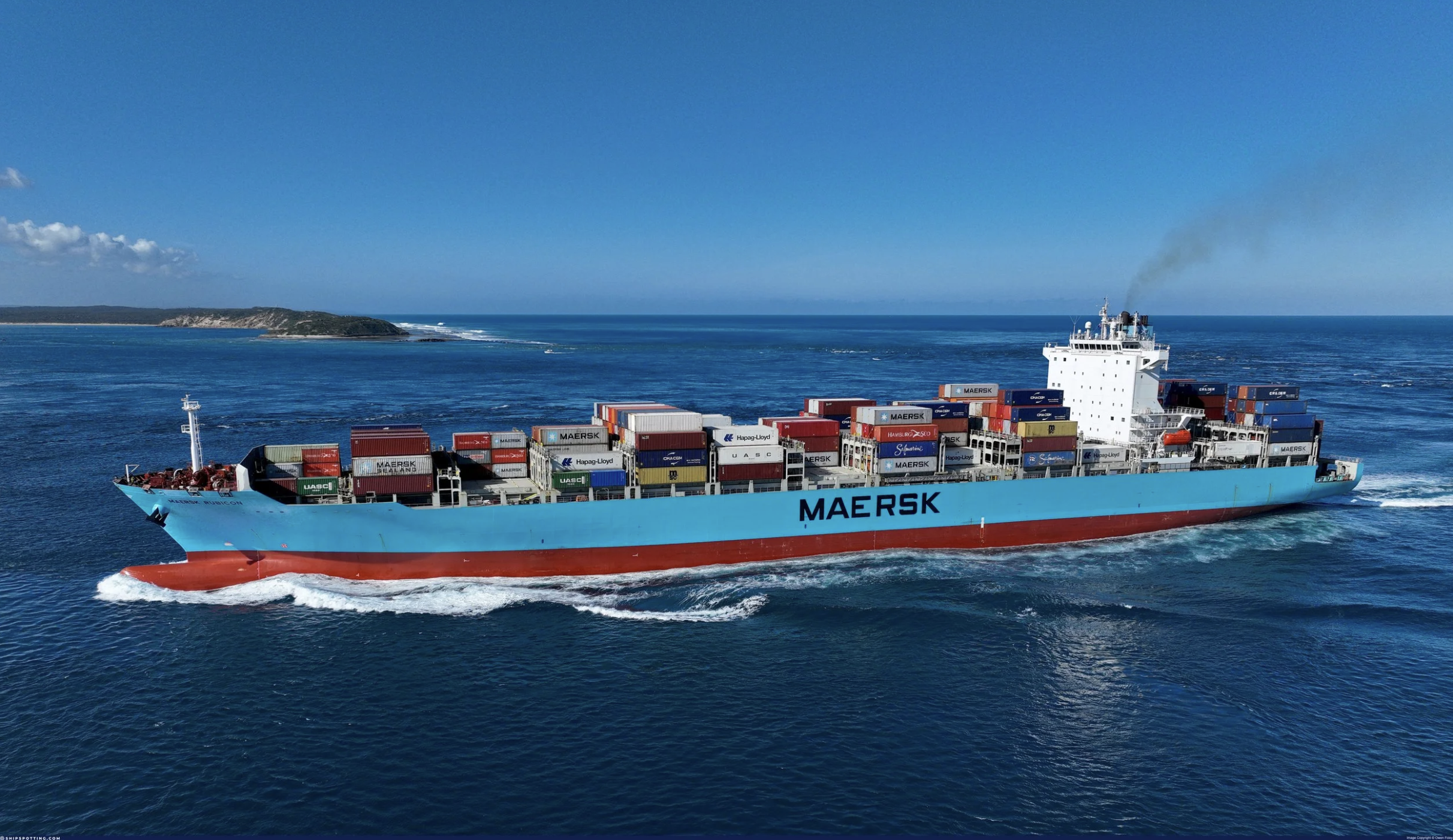
SOAR-MARINE™️ leverages NOAA's world-leading instrument and scientific capabilities in an innovative partnership with University of Washington, Maersk and OceansX to build a global network of marine atmospheric observations on commercial ships.
Aerosols play a major role in how solar radiation interacts with the Earth’s surface. They influence how much sunlight reaches the ground, how much is reflected back into space and how much becomes diffuse radiation. These effects matter enormously for temperature, weather patterns and climate models. At the same time, aerosols are one of the largest sources of uncertainty in climate projections.
To reduce that uncertainty, we need data. Not snapshots, not short campaigns, but sustained observation networks that operate over long periods of time and across diverse regions. That data is invaluable for understanding the aerosol processes that shape the climate system and for making climate models, weather forecasts and national security planning more accurate and actionable.
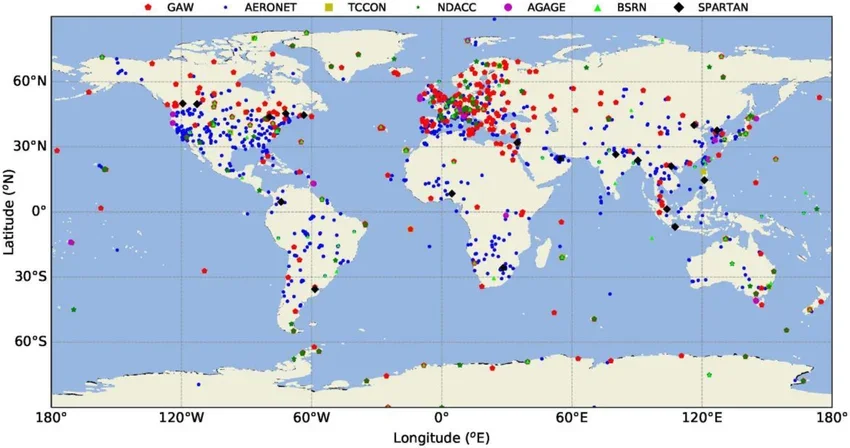
Global measurement networks for aerosols (observation sites and ship cruises).
One of the biggest challenges is geography. Many of the places that matter most for understanding atmospheric processes are also the hardest places to measure. The middle of the ocean is a good example: these regions are critical for understanding global circulation and aerosol transport, yet they are extremely difficult to access with the laboratory-grade instruments needed to measure key aerosol properties. Without creative approaches to sustained measurements, the oceans will remain largely unobserved.
Much of my current work is focused on expanding observation networks into these under-sampled regions. The goal is not just to collect new data, but to do so in a way that integrates with existing systems and long-term datasets. Scaled observations only become truly powerful when they can be compared against historical records and combined with satellite measurements and other observational platforms.
A key part of this work is building systems that are robust, autonomous and capable of operating in challenging environments without constant technical oversight. In a laboratory setting, instruments are maintained by full-time staff. In remote or mobile environments, that is not possible. Creating self-contained packages that can operate reliably over long periods is one of the central engineering challenges of sustained atmospheric observation.
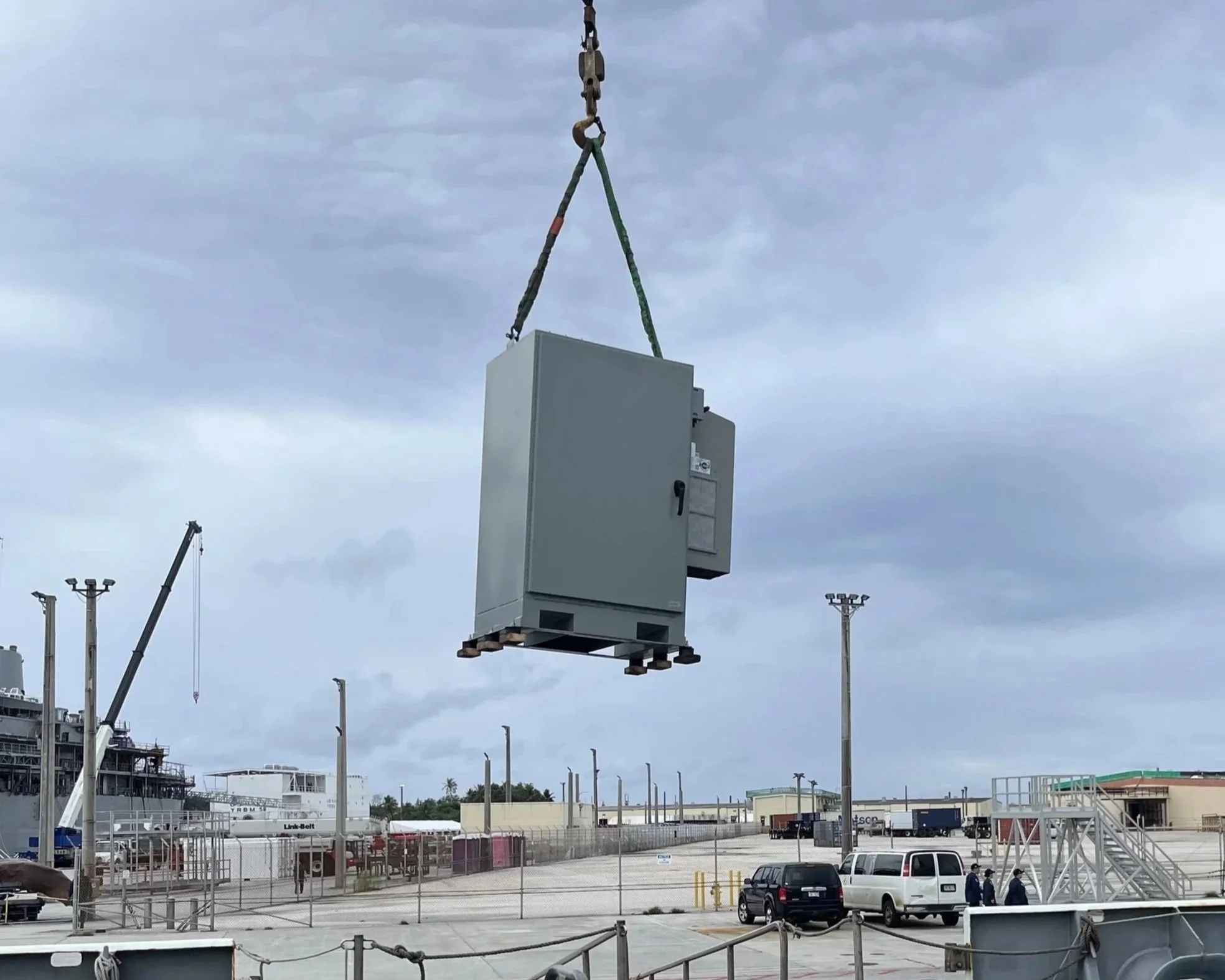
A crane lifting the aerosol sensing cabinet onto the dock.
With that goal in mind, I’m very excited to share that SilverLining has just completed our first at-sea deployment of our marine-hardened aerosol sensing package. We had the opportunity to join the University of Washington on their annual Collaborative Research in Earth System Science and Technology (#CRESST) research cruise, where an incredible group of researchers, including professors and students from UW, carried out coordinated ocean and atmospheric field campaigns.
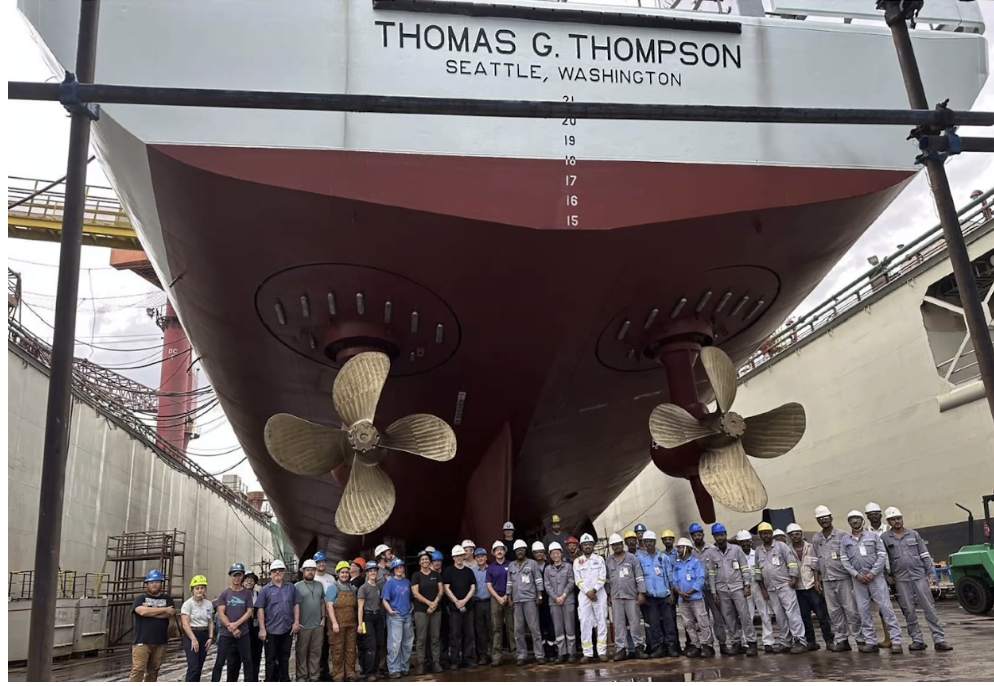
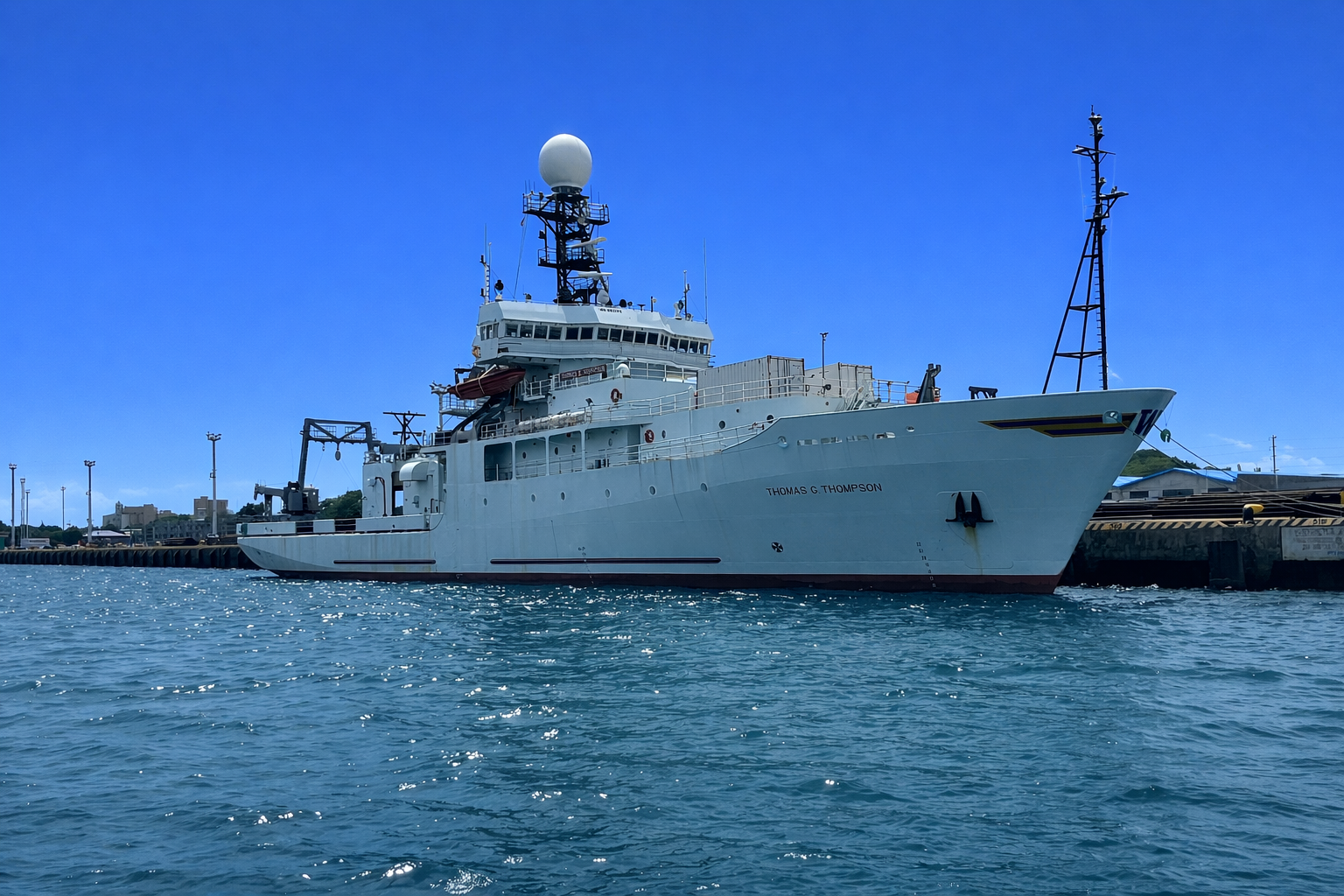
The research vessel Thomas G. Thompson (also called the Tommy Thompson) is operated by the school of oceanography at the University of Washington.
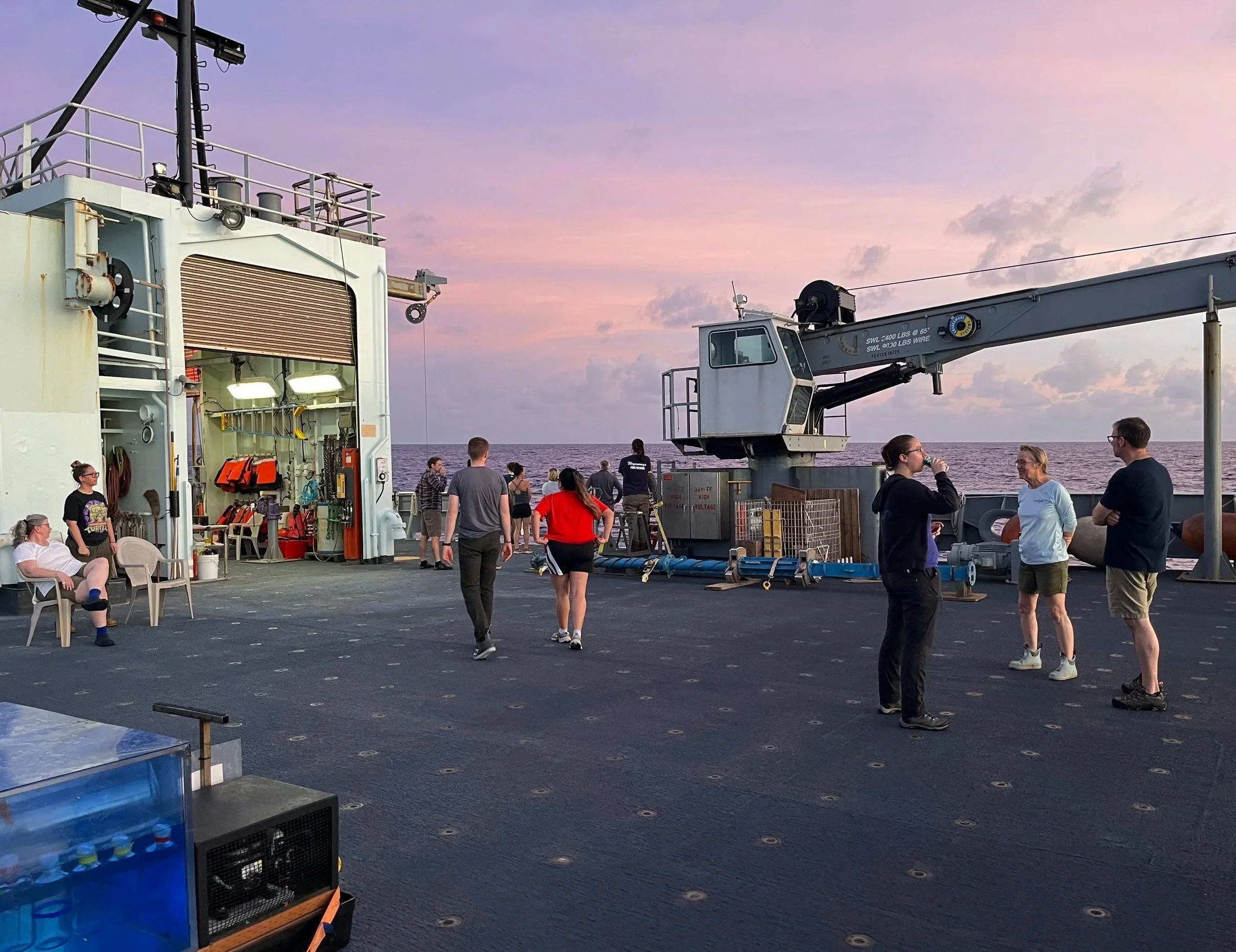
A sunset over the aft deck of the Tommy Thompson.
During this cruise we tested our core aerosol sensing package, which is designed to measure the optical properties and size distributions of aerosols as well as the meteorological conditions near the ocean surface. These measurements enable characterization of direct aerosol radiative forcing over the ocean. Combined with radiation sensors and satellite data, they allow us to better understand how aerosols influence the flow of energy through the climate system.
John Ogren, a veteran of NOAA’s Global Monitoring Laboratory and one of the key contributors to NOAA’s Federated Aerosol Network (NFAN), the network design on which we based our initial aerosol instrument package, joined the cruise on our behalf and led the shipboard installation and operations for our system. We were extremely fortunate to work alongside such a capable and supportive team, especially during the inevitable chaos of installation at sea.
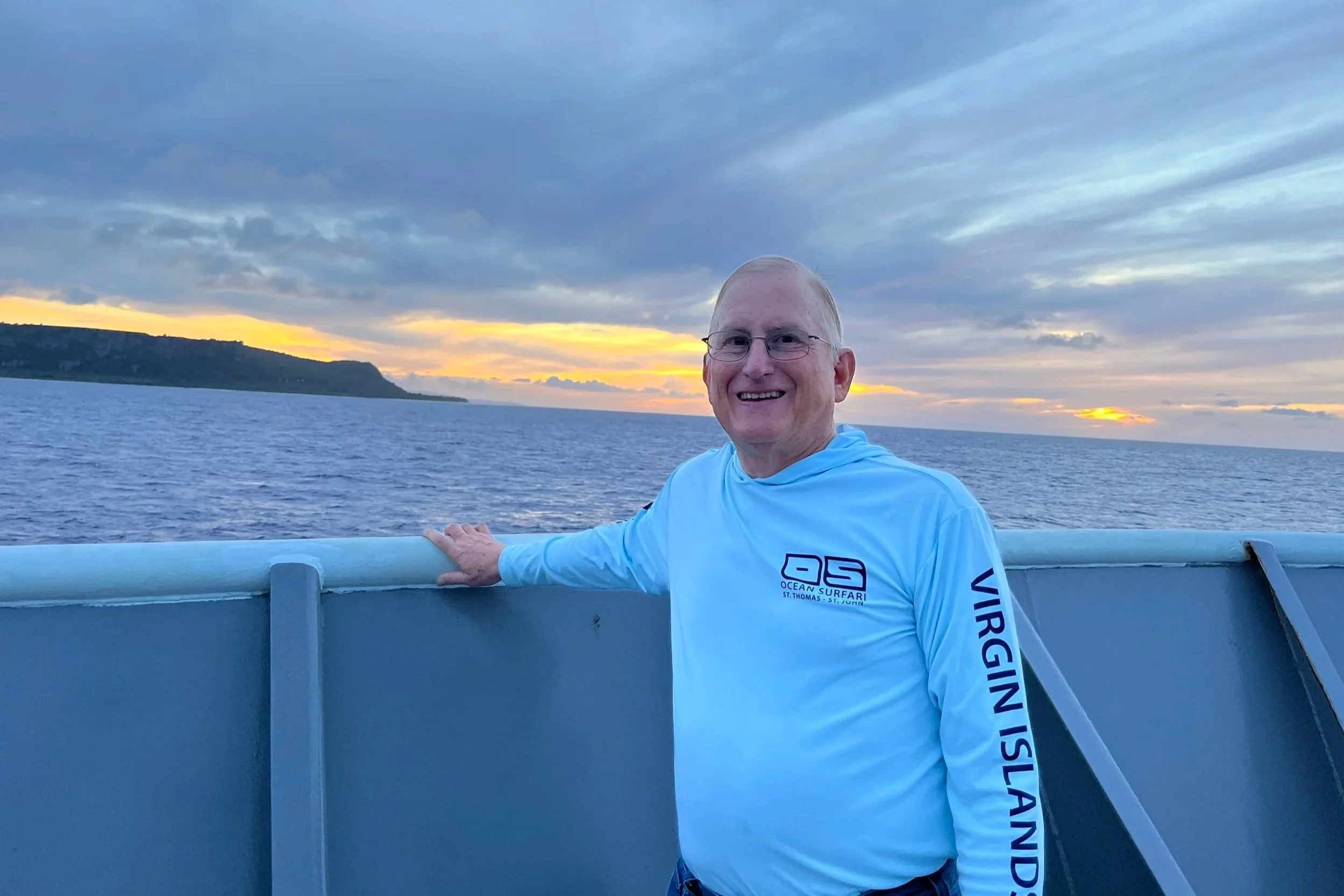
John Ogren, formerly from NOAA GML, enjoying a Guam sunset.
We’re coming home from this cruise with valuable results: real-world performance data on the system itself, including how well our enclosure maintained instrument temperatures, handled sea salt spray and ship stack plumes and the harsh handling of international shipping and ship board installation. Aerosol sampling can be finicky at best and it is very exciting to have data on how well our system handled the harsh conditions of the Pacific Ocean.
The most important outcome of this first campaign is that it gives us the operational intelligence to build something that lasts. We now have real-world performance data: what held up, what needs redesign and what improvements will make the system more reliable and easier to support without hands-on troubleshooting. Our next steps are to iterate on this initial package: incorporate the field lessons into a stronger sensor package and add additional instruments to broaden the set of variables we can observe. From there, the goal is scale: placing multiple self-contained packages on ships as a scaled observing network. That’s where the impact compounds, when the measurements continue through seasons, regions and years and the data become a durable foundation for science and decision-making.
The atmosphere remains one of the least directly observed components of the Earth system. Building and maintaining sustained observation networks is foundational. If we want better answers, we need better data, and that requires sustained commitment to observing the world as it is.
This blog was written by Sarah Schubert, Head of Marine Operations at SilverLining. Sarah is instrumental in providing engineering and operational expertise, encompassing the design, piloting, and evaluation of research platforms and sensors.
Prior to SilverLining, she served as the lead design engineer for Balloon Tech, where she contributed to the design of stratospheric vehicles for wildfire detection and scientific research and on Google X’s Project Loon, utilizing high-altitude balloons to provide internet access to rural and remote areas. Beyond her work in high-altitude platforms, Sarah has applied her engineering skills to various applications, including carbon sequestration, clean energy and biotech.
Sarah speaks further about the significance of SOAR and the package deployment here.